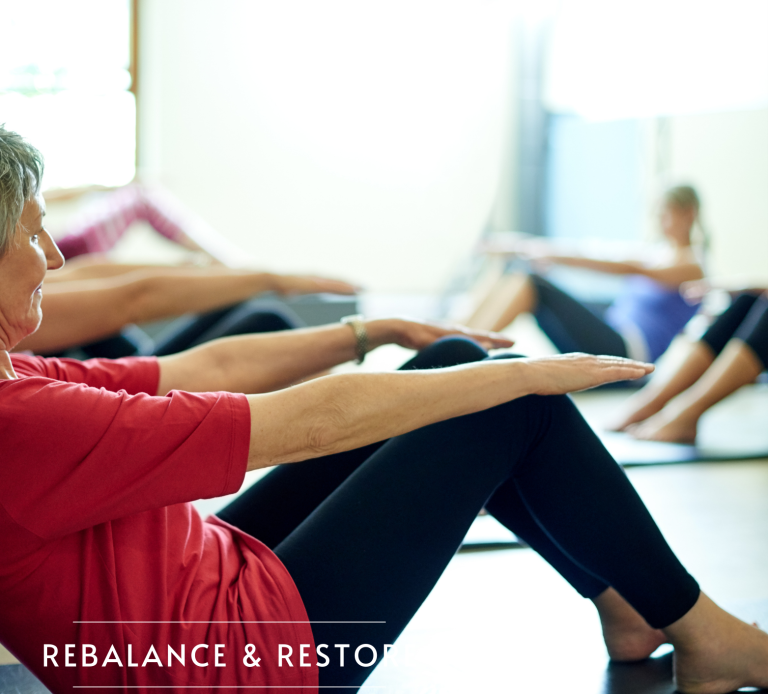
PILATES
Pilates can be beneficial for improving mobility and aiding in rehabilitation due to its focus on controlled movements, core strength, and flexibility. Here's how:
- Core Strength and Stability: By strengthening the core muscles, Pilates helps stabilise the spine and pelvis, which is crucial for improving overall body mechanics and preventing injuries.
- Improved mobility: Pilates exercises stretch and lengthen muscles, which can enhance flexibility and mobility. This is particularly important in rehabilitation, where restoring movement is often a primary goal.
- Controlled Movements: Pilates emphasises precise, controlled movements, reducing the risk of further injury and allowing for safe progression through rehabilitation exercises.
- Alignment and Posture: Pilates focuses on alignment and posture, which can correct imbalances, reducing strain on muscles and joints. This is essential in rehabilitating injuries caused by poor biomechanics.
- Low-Impact Exercise: Many Pilates exercises are low-impact, making them suitable for individuals recovering from injuries. They minimise stress on joints while still providing an effective workout.
- Individualised Approach: Pilates can be tailored to individual needs, making it adaptable for different injuries and conditions.
- Enhanced Mind-Body Connection: Pilates encourages mindfulness and body awareness. This helps individuals understand and correct faulty movement patterns that may contribute to their injuries.
- Progressive Rehabilitation: Pilates exercises can be easily adjusted in difficulty, allowing for gradual progression in rehabilitation as strength and mobility improve.